
William of Palerne and the Alliterative Revival
Updated: Feb 6

Dating from ca. 1336-1361, William of Palerne (The Romance of William and the Werewolf) is a Middle English alliterative adaptation of a longer, rhyming poem written in Old French. Today, it is seen as one of the earliest poems of the Alliterative Revival of the Fourteenth Century and some scholars link it to William Langland.
Alliterative poetry and its practice
Alliterative poetry has a long history in England, stretching back to Beowulf and beyond. By the fourteenth century, the form became highly developed before eventually fading in the sixteenth century.
In recent times, alliterative poetry has enjoyed something of a revival. From John Cooper Clarke's "The Pest" to the school of poets on Forgotten Ground Regained, we are beginning to see again the exciting rhythms and vibrancy which once were so popular.
In fourteenth century alliterative poetry, each line typically carried four stresses, often alliterating on the first letter of four stressed words (typically shown as aa-aa although this is by no means consistent).
Each line of poetry is also marked by a caesura, or pause, with the first half of the line (the a-verse) typically being longer that the second half (the b-verse). In the written form aa-aa, the hyphen represents the caesura, for example:
No tongue might tell - truly all the whole truth
But the stress pattern of such lines is open to debate and the line above is an excellent example. As it stands, the stress seems awkward to the modern reader and seems to read more naturally if "tell” is not stressed and a natural stress falls on "all", as follows:
No tongue might tell truly - all the whole truth
It can be seen that this now creates an aa-xa pattern, in which one word “all” is shown as a non-conforming alliteration and denoted with an “x". It can be seen that the caesura has also moved and the b-verse is shorter.

Even in alliterative masterpieces such as Sir Gawain and the Green Knight, the stress pattern varies considerably to include aa-ax, aa-xx, xx-aa and many others.
In some cases, an alliterating letter can appear more than the required four times in a given sentence. Similarly, poets sometimes hyper-alliterate by using the same alliterating letter over several lines, as in Alliterative Morte Arthure.
These variations have led to significant scholarly debate; some have argued that any variations falling outside aa-aa are a sign of scribal corruption. In other words, perfect long-line alliterative poetry should be seen as that crafted in the aa-aa form.
When rhyme is brought into the equation – as in fifteenth century poems of the “Northern Gawain Group” – the question of where stress appears and the relationship between the a- and b-verses becomes extremely vexed and is still unresolved.
William of Palerne and the Alliterative Revival
Much has been written about the Alliterative Revival of the fourteenth century, a period which seemingly witnessed the re-emergence of a style of poetry much enjoyed by Anglo-Saxon audiences in the years before the Norman Conquest.

Most scholars highlight the position of William of Palerne (the Romance of William and the Werewolf) in the forefront of this revival, but how true is it to say that the work was ground-breaking, even if it was early?
The surviving evidence appears to show that long-line alliterative poetry re-emerged in the fourteenth century and that the earliest examples were indeed either the debate poem Winner and Waster or William of Palerne.
Winner and Waster can be dated by its references to Edward III and more specifically to the Statute of Labourers (1351) and the Treasons Statute of 1352, which means it was written after these laws were imposed, although precisely when is unclear.
However, William of Palerne contains two dedications to its patron, Humphrey de Bohun, who was Earl of Hereford and Essex between 1336 and 1361. This suggests that the poem itself was transcribed during his lifetime (i.e. possibly before 1350), otherwise the dedications would be in Humphrey’s memory.
But the question of novelty is moot; as Eric Weiskott reminds us, there was a continuity in the English alliterative tradition in the medieval period. Hence, despite the physical evidence suggesting a re-emergence of alliterative poetry, it is quite possible, probable even, that the tradition was ongoing and had not died out at all.
It certainly seems strange that such an articulate, vocabulary-rich form of poetry was ‘invented’, ‘re-discovered’ or 'revived' in the 1350s.
All we can say for certain is that huge gaps are left in the surviving written evidence might, on the surface, suggest a revival. On the other hand, lack of evidence does not equate to fact; the gap between earlier alliterative poems and those from the fourteenth century may be entirely circumstantial.
It is in this latter context that William of Palerne, The Romance of William and the Werewolf, must be viewed. The poem is an alliterative romance responding to audience demand.
The translation of William of Palerne into the alliterative form
William of Palerne, as the poem is best known to scholars, was translated from the Old French Guillaume de Palerne. The source poem was transcribed a century earlier and, if its poet is to be believed, his own work was a redaction of a text first written in Latin.
The Old French Guillaume is notable for being over 9500 lines in length and written in rhyming couplets. This is significant because the Middle English William is just over half the length of its source, contains several episodes distinct to the English version, is non-rhyming, and is written in the alliterative long line.
The battle scenes in the English text are also less violent than its source and the whole poem contains a distinct religiosity, seemingly linked to the Augustinian beliefs of its patron, Humphrey de Bohun.
In other words, there was considerable scribal intervention from the English writer, a man named in the text as “William” [ l. 5521].
It is notable that the source poem is dedicated to Countess Yolande of Hainault [l. 9656] who died between ca. 1202-1223, and that William chose to replicate this device by incorporating the name of his own patron, Earl Humphrey not once but twice.

If the religiosity of the text is fundamental to Humphrey’s beliefs, the suggestion that there was a strong link between writer and patron is significant. The work almost certainly must be seen as a specific and involving commission where patron and writer had a common understanding.
This is suggested further by the translation process itself. Scribe William not only understood French well, but he was also fluid in his ability to extend the French lines into the alliterative long line of the Middle English text. This suggests a translator of considerable education.
It also highlights the popularity of the original French version and hints at the demand for it to be written in alliterative English. Certainly, according to Scribe William, his patron asked for the work to be done for “those who know no French nor ever understood it” [l. 5332] but, critically, he does not say that he has been asked to write it in alliterative form. This suggests that the use of alliterative verse was both widespread and expected - i.e. it was not a novelty to be "revived".
Notwithstanding, perhaps the most distinctive feature of the poem is that William of Palerne is an exercise in poetic craft. Unlike Winner and Waster, the poem has a known written source with which we can compare a starting point and an outcome in how a poet engages with his creative practice.
We can follow the journey of Scribe William from source to final product and see the decisions he made.
Scribe William and William Langland
Several scholars have linked Scribe William with William Langland. Certainly, there is a connection between their dialects and also a location around the Severn valley.

Langland is thought to have been born in Shropshire and the opening passages of the alliterative Piers Plowman (written somewhere between 1367 and 1377) offer a dramatic depiction of the Malvern Hills and their inhabitants in the valley below.
Scribe William's origins are less clear but his description of Edward II's tomb at Gloucester [l. 166] suggests him living in the same part of the world as Langland. A number of Humphrey de Bohun's estates were also located in the area.
Analysis of the dialect present in Scribe William’s text is complicated by the fact that the text we have of the poem is not the original but a copy of the original (or a copy of a version very close to the original in date).
The extant manuscript is thought to date from ca. 1375, which places it to in a bracket of 15-40 years of the lost autograph text. In two separate pieces of research, Gerrit Bunt has argued that this text shows the original poet was from southern Worcestershire or Warwickshire and that it also shows dialectal traces from the West Midlands, eastern England and Norfolk.

These latter references may reflect scribal work undertaken at de Bohun's caput at Pleshey in Essex; it is possible that the extant text incorporates copying undertaken in Essex from a manuscript originating in the west.
If Scribe William and William Langland were the same, it has been suggested to varying degrees by those such as George Kane and Lawrence Warner that William of Palerne may have been an earlier work. The implication is that the poem was almost an apprentice piece for a craft in progress.
However, any judgement in this way infers that William of Palerne is an early work of the Revival, and that the Revival itself was a work in progress with this poem at its origins. As we have discussed above, the Revival may never have happened in this way at all.
Furthermore, William of Palerne shows a profound linguistic skill, a detailed capability in abridgement and adaptation, an evident ability in the writing of alliterative verse and the creation of an enjoyable, well-structured standalone text. The text is also noted for it containing the first example of the singular 'they' in written English.
This is not an amateurish work; arguably, it shows a much stronger and richer use of alliteration than Piers Plowman, even if the latter work is felt to possess greater gravitas and nuance.
Notwithstanding, the fact that both narratives involve elements of disguise (Langland’s dreamer as a shepherd/sheep; William, Melior’s and the Queen's animal disguises and Alphonse's conversion to a werewolf) is intriguing. In disguise, we can follow both narrator or characters through a world of the imaginary on our route to revelation and salvation.

The religiosity of both texts is clear, suggesting some commonality of interest by the poet. However, Piers Plowman’s use of allegory and satire contrasts with William of Palerne’s optimism and gentle narrative, where God is seen as creator and redeemer.
Many alliterative texts, including Sir Gawain and the Green Knight, are distinguished by a deep religious virtue in their characters, and a sense of suffering and penance. This is lacking in William of Palerne; the text seems instead to exude a hope for society and a better world, a fact possibly linked to the social changes surrounding the Black Death.
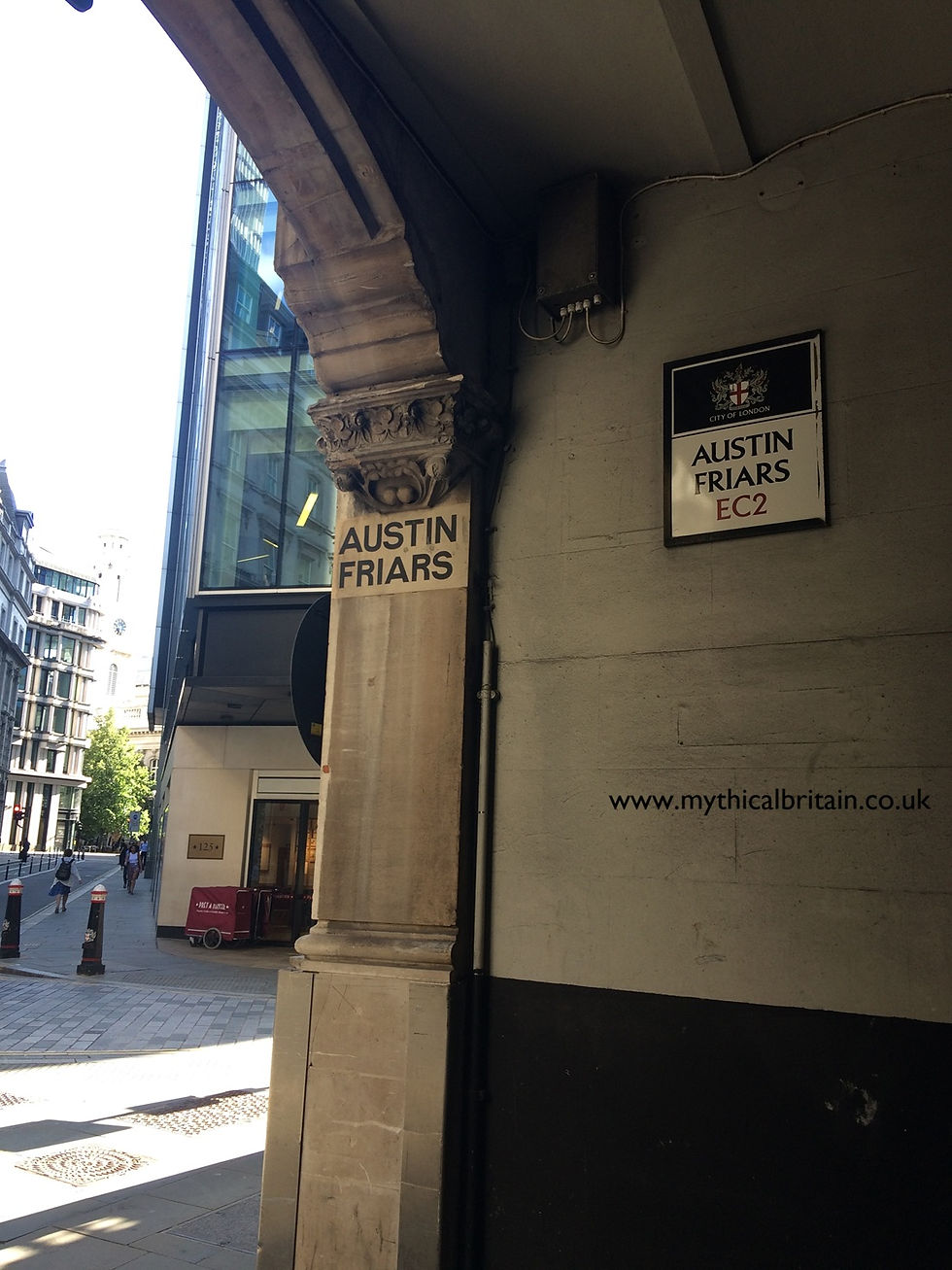
We know from his own will that Humphrey de Bohun was a devout Augustinian and that he was interred at Austin Friars in London (alas, sadly destroyed during the Blitz). We also know that his executor was William de Monklane, a long-term confidante of the Earl.
It is possible, albeit unproven, that de Monklane, with his intimate knowledge of his patron and fundamental involvement with the establishment of de Bohun’s manuscript workshop at Pleshey, may be Scribe William. I discuss this in greater detail in my own translation of William of Palerne.
The history and significance of the alliterative poem William of Palerne
If we were to study William of Palerne within the context of J P Oakden’s magisterial survey of alliterative poetry for the Manchester University Press in the 1930s, we might be inclined to see it as a nascent player in a significant revival of a lost literary form.
However, the history and significance of William of Palerne to my mind lies elsewhere. Its portrayal of a deep relationship between author (poet-scribe) and patron (a literary earl) is a fascinating example, of an intimate author-publisher model.
The poem’s conversion from a French rhyming romance to an abridged alliterative narrative intended for a world speaking only English suggests a text written for a world in transition. It also suggests a vibrant hinterland of stories intended to bring joy to a greater market than an aristocratic few.
The leading theme of the poem – social justice and the righting of wrongs – hints at a patron who saw social justice as fundamental, albeit one still contained within the structure of a slowly fading feudal society.
Like all great poetry, William of Palerne, The Romance of William and the Werewolf, is timeless. Popular enough to be translated from Latin to French and then to English, the book was to be enjoyed down the centuries.
It’s hardly surprising. When we see about us the grotesque abuse of power by undeserving leaders and their repugnant joyless sycophants, the poem’s demands for decency and justice and an end to robbery, lies and flattery is as relevant today as it’s always been.
See the book - and buy a copy (published by Wilton Square Books)!
Order your copy of The Romance of William and the Werewolf

My translation of William of Palerne (The Romance of William and the Werewolf) was published in 2024 in UK (2025 in the US). My publisher is Wilton Square Books.
As well as a complete translation of the romance, the book also includes: an historical introduction (covering in more depth the subject matter in this blog post); detailed appendices examining the role of the narrator and the romance's original 12th Century Old French source; comprehensive notes; and a thorough bibliography should you wish to undertake further research into this magnificent romance.
Please help support independent publishers by ordering through me, my publisher or through the independent book trade using one of the channels below. With Bookshop.org you can nominate your local bookseller to receive a percentage of the sales price - helping them survive in a world dominated by online retailers.
About the author, Michael Smith

I am a British translator and illustrator of medieval literature. I am also an established printmaker, with work in private collections worldwide.
My books, including translations of Sir Gawain and the Green Knight, the Alliterative Morte Arthure, and William of Palerne, are published by Wilton Square Books and are available through all the usual outlets. All my books feature my own linocut prints as their illustrations.
To find out more about me, please click here
For more details of my books and how to purchase signed copies, click here.


Comments